
This week, I made three different social media posts on three different platforms promoting the same article. The purpose of this is to showcase how we can optimize our engagement on each social networking site by tailoring our posts to each platforms’ unique environment. Although they may function the same, social media apps can entail vastly different communication cultures.
Let’s start with Twitter. According to business.twitter.com, some of the organic best practices include:
- Being concise
- Using no more than 1 or 2 hashtags
- Having a clear call-to-action
- Avoiding all-caps
- Staying conversational
- Using emojis

For my post, I tried to keep it short and sweet, while including a call-to-action in each sentence. The first word is a command – “Think.” The second sentence is a question, and the third presents a mystery. The final call-to-action includes the name of the article, along with “Read more.” I added an emoji to make the post more interesting and relatable, and because it is recommended as a best practice for Twitter.
Next, I posted on Facebook. Here are some of the best practices listed on facebook.com:
- Be conversational and authentic
- Post a variety of content
- Use features on app like Boomerang, filters, etc
- Interact with comments
- Use stories
- Use hashtags
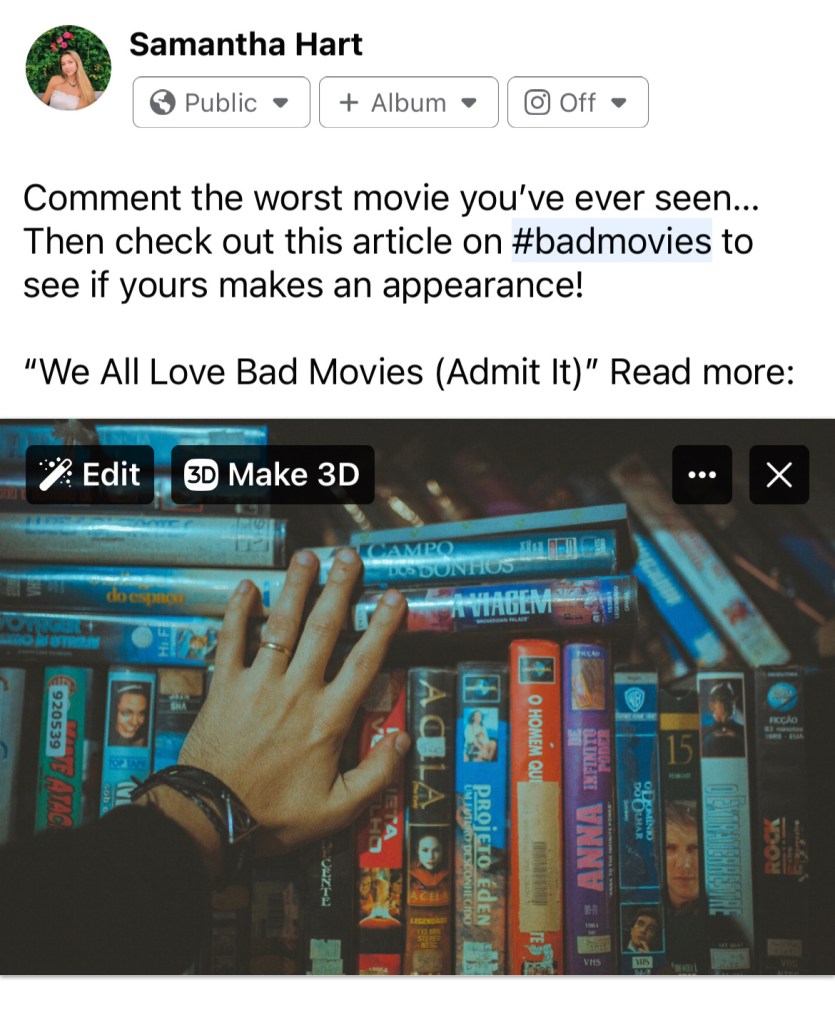
On Facebook, I decided to start my post with a call-to-action that encourages the reader to engage with the post. The second sentences creates a connection between their comment and the article, encouraging them to continue reading. I included the use of a hashtag within the post itself for a cleaner look rather than sticking it at the end. Finally, I listed the title of the article, along with “Read more.”
Lastly, I created a post on LinkedIn, which is a very different platform than Twitter and Facebook. While it is a much more professional setting, making a personal connection is still very necessary for users to gain an interest in your content. According to social media strategist Katie Brinkley, here are some of the best practices for posting on LinkedIn:
- Create an emphasis on humanity
- Be personal
- Engage with other people and businesses
- Make content that is easy to read by utilizing bullet points, small paragraphs, etc
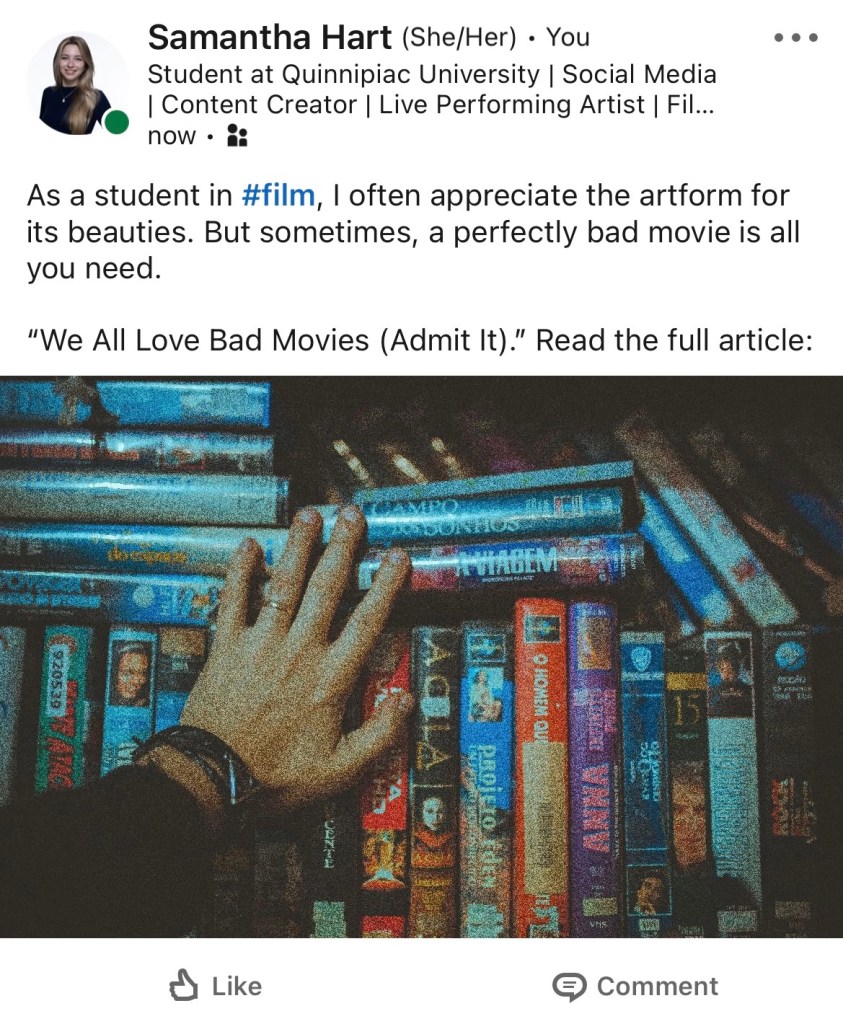
For my LinkedIn post, I decided to go about it a bit differently. Rather than putting an emphasis on a call-to-action, I established a connection to my personal experience and expertise on the topic. At the same time, I kept a conversational tone by using short sentences and relaxed phrasing, such as starting the second sentence with “But.” I also included a hashtag within the text to hopefully attract other professionals interested in the topic. At the end of the post, I still included a call-to-action by writing “Read the full article.”
When posting on social media, keep in mind the culture of how people communicate on whichever platform you’re writing for. This can help boost your engagement and reach a wider audience of users.
References:
Best Practices for Facebook and Instagram. Best Practices for Facebook and Instagram | Meta for Media. (2018, August 13). Retrieved March 5, 2023, from https://www.facebook.com/formedia/blog/best-practices-for-facebook-and-instagram
Brinkley, K. (2022, March 10). Posting on Linkedin – Best Practices for 2022. LinkedIn. Retrieved March 5, 2023, from https://www.linkedin.com/pulse/posting-linkedin-best-practices-2022-katie-brinkley/?trk=pulse-article_more-articles_related-content-card
Twitter. (n.d.). Organic best practices. Twitter. Retrieved March 5, 2023, from https://business.twitter.com/en/basics/organic-best-practices.html
 Meditation Media
Leave a comment